Renting vs. Buying Dive Equipment: When Is the Right Time to Invest?
One of the Most Common Questions New Divers Ask
After earning their Open Water certification, many divers start wondering:
“Should I continue renting gear or is it time to buy my own equipment?”
The answer depends on your diving goals, budget, and how often you plan to get underwater.
The good news is that there is no right or wrong answer.
Many divers begin by renting equipment while gaining experience, then gradually build their personal dive kit over time.
Let’s look at the pros and cons of both approaches.
The Benefits of Renting Dive Equipment
For newer divers, renting can be an excellent option.
Lower Initial Cost
Scuba equipment is an investment. Renting allows you to continue diving without a significant upfront purchase.
Try Before You Buy
One of the biggest advantages of renting is the opportunity to try different equipment.
You may discover:
- A preferred BCD style
- Different regulator breathing characteristics
- Different exposure protection options
- Features you like or dislike before making a purchase
This experience often leads to better purchasing decisions later.
No Maintenance Responsibilities
When you rent equipment, servicing and maintenance are handled for you.
You simply show up, dive, and enjoy your day.
Ideal for Occasional Divers
If you’re only diving once or twice a year, renting may make more financial sense than purchasing and maintaining equipment.
The Benefits of Owning Your Own Equipment
As divers gain experience, many discover that owning equipment provides significant advantages.
Familiarity Builds Confidence
Every piece of scuba equipment feels slightly different.
When you own your own gear:
- You know exactly how everything fits
- You know where every buckle and pocket is located
- You become more comfortable underwater
- Your setup becomes second nature
That confidence translates into better diving, skill execution, and handling issues, making you a safer diver.
Consistency
Using the same equipment every dive helps eliminate variables and allows you to focus on improving your skills.
More Diving Opportunities
Having your own equipment often makes spontaneous diving easier.
Many divers discover they dive more frequently once they own their gear.
What Equipment Should You Buy First?
At Float N’ Flag, all Open Water students are required to purchase their own:
- Mask
- Snorkel
- Boots
- Fins
These are highly personal pieces of equipment, and proper fit is essential for comfort, performance, and enjoyment underwater. As you recall from your Open Water Diver course, a surface signalling device, audible signalling device, and a line cutter should always be with you if you are diving in open water.
A mask that leaks, fins that cause cramping, or boots that don’t fit properly can quickly turn an enjoyable dive into a frustrating experience. Having your own equipment ensures consistency throughout your training and future diving adventures.
The First Piece of Equipment We Recommend After Certification: A Dive Computer
If you’re wondering what to purchase next, our answer is simple:
A dive computer.
A dive computer becomes your personal diving companion on every dive.
Benefits include:
- Real-time depth monitoring
- Dive time tracking
- No-decompression limit calculations
- Surface interval tracking
- Dive log functionality
- Increased safety and awareness
Unlike other pieces of equipment that you may occasionally rent, your dive computer travels with you everywhere.
Whether you’re diving at Gulliver’s, exploring Tobermory wrecks, drifting in Brockville, or travelling abroad, your dive computer will likely become the most-used piece of equipment you own.
For many divers, it is the single best equipment investment they can make.
A Recommended Equipment Progression
As your diving experience grows, we often recommend building your equipment collection in stages.
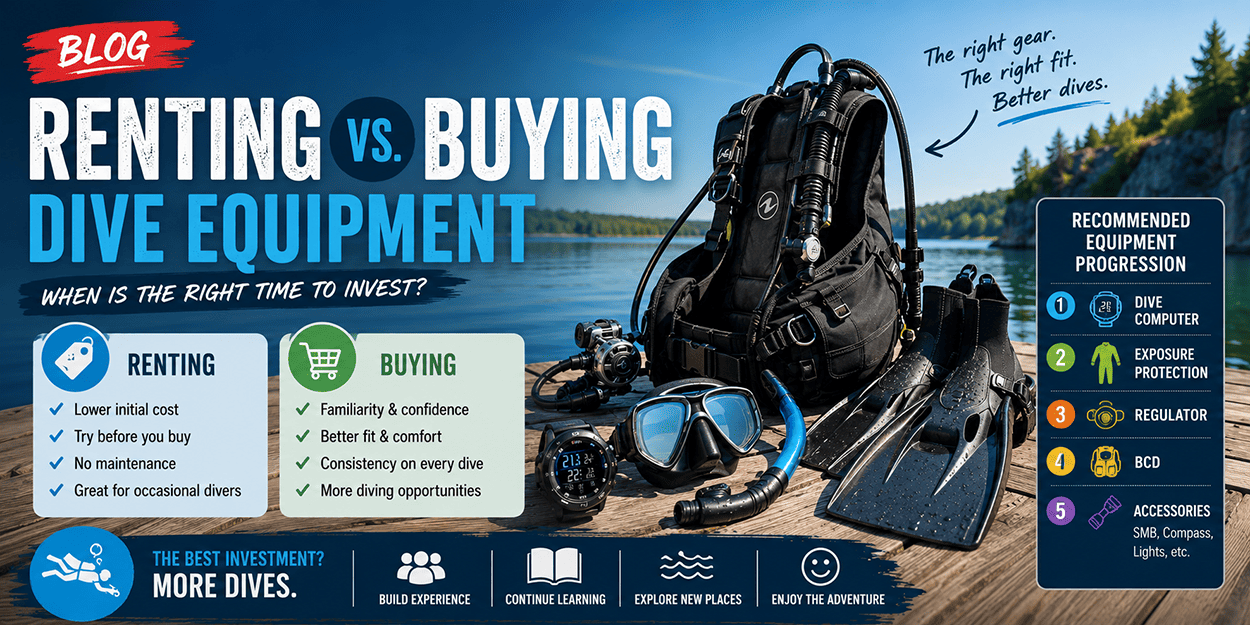
1. Dive Computer
Your most important purchase after certification.
2. Exposure Protection
Whether it’s a wetsuit for travel or a drysuit for Ontario diving, properly fitting exposure protection dramatically improves comfort and extends your diving season.
3. Regulator
Your life-support system. Owning a regulator provides consistency, familiarity, and confidence on every dive. Plus, you know how it’s supposed to breathe, so if it feels different, you can prevent an issue underwater!
4. BCD
A properly fitted BCD improves comfort, trim, buoyancy control, and overall diving enjoyment.
5. Accessories
As your experience grows, you’ll likely add accessories, or even upgrade ones you already had, such as:
- SMBs (Surface Marker Buoys)
- Compass
- Audible signalling device like Dive Alert
- Dive lights
- Cutting devices
- Reels and spools
The key is to build your equipment kit gradually and purchase items that support the type of diving you enjoy most and that are decent quality.
Remember, the goal isn’t to own the most equipment—it’s to own the right equipment for your diving adventures.
The Financial Reality
Many divers assume buying equipment is always more expensive.
However, if you’re diving regularly, equipment ownership often becomes more economical over time.
Consider:
- Rental costs
- Local diving frequency
- Training courses
- Travel opportunities
- Equipment lifespan
For active divers, quality equipment can provide many years of reliable service.
A Hybrid Approach Works Well
Many divers find the best solution is a combination of ownership and rental.
For example, you may own:
- Personal equipment (i.e. mask, snorkel, fins, boots)
- Dive computer
- Exposure protection
While renting:
- Regulator
- BCD
As your experience grows, you’ll naturally discover which pieces of equipment make the most sense for your style of diving.
The Most Important Investment Is Diving
While equipment ownership has many benefits, gear does not make someone a great diver.
Experience does.
Whether you’re diving in your own equipment, rental gear, or a combination of both, the most important thing is getting underwater, building experience, and continuing to learn.
Great divers aren’t defined by the equipment they own—they’re defined by the dives they’ve made and the skills they’ve developed.
How Float N’ Flag Can Help
Not sure where to start? Our team is always happy to discuss equipment options based on your diving goals, experience level, and budget.
We can help you:
- Choose the right gear
- Understand equipment features
- Build a kit over time
- Avoid costly purchasing mistakes
Whether you’re looking for your first dive computer or your first complete scuba system, we’re here to help.
Ready to Build Your Dive Kit?
Visit Float N’ Flag Dive Centre or speak with one of our instructors about equipment options that fit your diving style, diving goals, and budget.
We have an extensive array of demo equipment that you can rent so you can try before you buy. This includes exposure protection, computers, BCD’s, Backplates and Wings, regulators, and much more. Ask us about these and the options, like financing, that can get you in some new gear faster.